


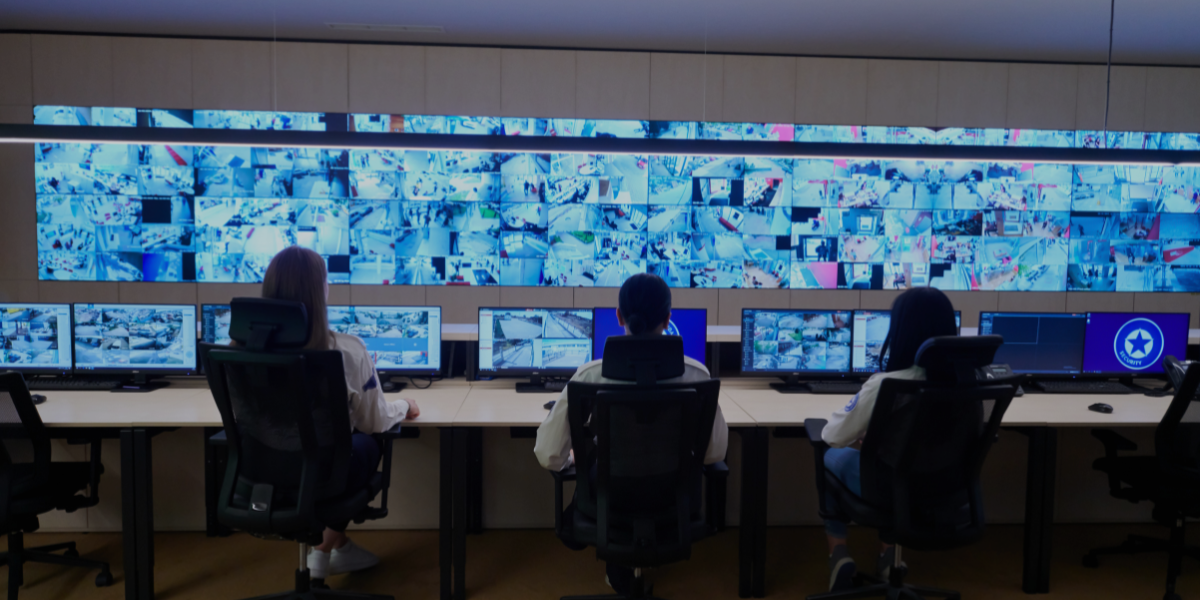
Video surveillance is no longer a passive system that only records events. In 2025, security, IT and operations leaders are looking for useful information, not just recordings. The key question is no longer “do we have cameras?”, but “are we using video data to improve decisions and reduce risks?”.
IP video surveillance, combined with advanced analytics, enables just that: turning raw video into operational intelligence.
What is IP video surveillance and why is it key to decision making?
IP video surveillance is a system of cameras that transmit video over data networks, allowing real-time analysis, remote access, integration with software and operational insights.
Unlike analog systems, IP video surveillance integrates with analytics, AI and intelligent storage platforms, making it a useful tool for areas such as:
- Physical security
- Operations
- Loss prevention
- Customer experience
- Quality control and compliance
- Audit and traceability
¿How it works in a corporate environment?
- Capture: IP cameras with advanced sensors.
- Transmission: LAN/WAN network, PoE or wireless infrastructure.
- Processing: servers, VMS, analytics or intelligent NVRs.
- Visualization and alertness: dashboards, mobile apps and monitoring centers.
- Data analysis: patterns, anomalies, flows, time-space.
This structure enables a comprehensive view of what happens in the plant, store, branch or logistics center.
How does IP video surveillance transform information into decisions?
IP video surveillance generates actionable insights by detecting patterns, predicting incidents and enabling evidence-based decisions.
1. Real-time insights for critical decisions
Modern IP cameras, especially with embedded analytics, allow:
- Intrusion detection
- Irregular motion recognition
- Virtual perimeter alerts
- Counting people or vehicles
- Identification of anomalous behavior
Real example:
A regional retailer reduced its operational losses by 28% by integrating video analytics at checkouts and in aisles, detecting risk patterns before they led to incidents.
2. Historical analysis for strategic decisions
Not everything is defined in real time. Retrospective analysis allows you to make better decisions about:
- Distribution of personnel
- Operating rules
- Store or warehouse layout adjustments
- Highest incidence times
- Process bottlenecks
Relevant data:
According to McKinsey, data-driven organizations make decisions 23% faster and 19% more accurately.
3. Integration with advanced analytics and AI
IP video surveillance integrates with AI-based platforms for:
| Need | Type of analysis | Key benefit |
| Incident prevention | Video analytics + AI | Proactive risk reduction |
| Operational optimization | Heatmaps and counting | Better planning and efficiency |
| Compliance | Recognition of EPP or protocols | Continuous and automated auditing |
| Customer experience | Flow analysis | Increased sales and satisfaction |
The integration between IP video surveillance and analytics allows video to stop being a dead record and become a continuous source of organizational learning.
Key benefits: why IP video surveillance improves decision making
IP video surveillance improves decision making because it centralizes information, generates reliable evidence and enables predictive actions.
Main advantages:
- Integral visibility: from macro (branch office) to micro (workstation).
- Verifiable data: each decision is supported by visual evidence.
- Early warnings: allows to anticipate incidents before they escalate.
- Personnel optimization: better distribution and higher productivity.
- Automated compliance: continuous verification of processes and PPE.
- Better user experience: faster flows and less friction.
- Cost reduction: less reprocessing, fewer incidents, less losses.
Use cases with direct impact on business decisions
1. Retail
- Identification of high traffic areas.
- Customer route optimization.
- Purchase behavior analysis.
Manufacturing
- Visual confirmation of protocols.
- Detection of operational risks.
- Time and process auditing.
3. Logistics centers
- Traceability of merchandise.
- Quick validation of claims.
- Supervision of loading and unloading.
4. Financial sector
- Branch monitoring.
- Analysis of queues and service times.
- Improvement of security protocols.
Conclusions: moving from simple recording to operational intelligence
- IP video surveillance is an enabler of evidence-based decisions.
- Its value is not in recording, but in analyzing.
- Integration with analytics and AI transforms video into actionable insights.
- Its strategic use impacts security, operations, compliance and customer experience.
For organizations seeking greater efficiency, lower risk and faster decisions, IP video surveillance is a centerpiece of their technology architecture.
FAQs
1. What differentiates IP video surveillance from analog video surveillance?
IP video surveillance transmits video over the network, enables superior resolution, advanced analytics, remote access and scalability.
2. How does video analysis help improve decisions?
It generates patterns, identifies anomalies, predicts incidents and provides verifiable data to support tactical and strategic decisions.
Does IP video surveillance require new infrastructure?
Not always. Can be integrated into existing networks, add PoE switches or migrate progressively according to risk and priority levels.
Is it expensive to implement video analytics?
It depends on the case. Many platforms allow you to start with modules (counting, perimeters, flows) and scale without replacing cameras.
Do you want to assess the maturity level of your IP video surveillance system or explore how analytics can improve your decisions? Contact us and let's talk about your operation.