


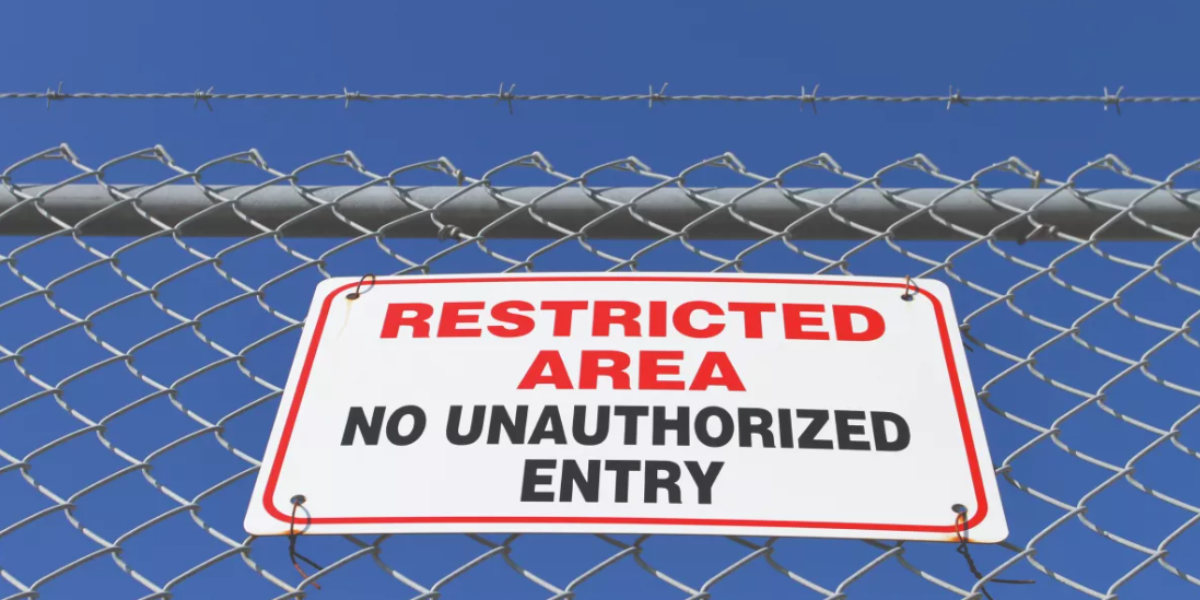
Usually, when we think of "perimeter protection", images of high walls and chain link fences come to mind, but it is often much more than that. While physical boundaries are critical to stopping threats, they must also be closely monitored. Implementing advanced technological solutions at the perimeter is the key to effective protection.
Access control continues to be a critically important component of any access control solution. safety and securityand begins with the protection of the outermost boundary or perimeter of the property. However, the complexity of the approach required often depends on the size, purpose and location of this boundary. In some cases, perimeter protection can be straightforward. On small sites, for example, a fence and a manned control point is often sufficient. However, not all perimeters are the same, and perimeters can extend for miles on large sites, so monitoring them, as well as any intervention, can be challenging for security personnel.
Fortunately, there are a range of advanced technology options designed to "see" where the eye can't see and help security personnel protect property and even territory. Integrated network devices facilitate smarter, cyber-secure, IP-based perimeter surveillance that will help security personnel detect threats, minimize false alarms and protect facilities, even when they are at long distances and in varying lighting conditions.
Implementation of a multi-layered approach
Before exploring the different approaches that can be implemented, it is worth considering the objectives of the safety and security strategy. Essentially, the goal is to stop and prevent threats (land, sea and air) before they even gain access to the facility and cause damage to valuable assets. Such damage can include theft, vandalism and even attacks on the devices themselves to gain access to the company's network as part of a cyber-attack.
Dividing the perimeter into different zones allows security professionals to consider the type of sensors needed at each layer. This multi-layered approach not only offers flexibility and scalability within the solution, but also determines how these sensors communicate and interconnect in alert and emergency scenarios. The integration of different components, such as radar, cameras, other sensors and AI-based analytics, will provide the best possible solution.
This means that the surveillance zone must begin beyond the property boundaries, known as the "pre-frontier" zone. Monitoring this area allows security teams to detect activity and potentially intervene. before the threat to gain access to the facility.
In this area, the radars or thermal cameras located on the front fence can be directed outward to detect and identify unwanted activity or potential intruders at any time of the day, over long distances and in different weather conditions. This allows detection of people well in advance of their arrival at the gate or fence. Combining cameras with third-party drone-based detection solutions makes it possible to track and identify aerial threats, and notify security personnel of any suspicious activity. Here too, strobe sirens or loudspeakers can be integrated with existing sensors to help deter intruders.
It should be noted that false alarms can occur in this area, so the use of a combination of technologies equipped with AI-based analytics will improve detection and differentiation of current threats to improve efficiency.
Moving inward from the front fence, the perimeter can be further divided into protection zones, barrier or bollard zones and a second fence. These constitute the next areas for detection and intervention, and should be monitored to prevent intruders from accessing the property. Similar to the approach taken for the pre-frontier zone, a combination of networked technologies can be deployed here to detect and deter intruders who have managed to cross the first line of defense before they reach valuable assets.
Border control: perimeter protection in action
Border control is the ultimate example of how physical boundaries can be monitored and protected. This is due to the combination of long distances, changes in terrain and the need for strict access control. Borders must be continuously monitored to prevent illegal activities. It is worth bearing in mind that geopolitical tensions can further complicate matters, especially during periods of conflict.
In this scenario, the objectives of effective perimeter protection are to support security personnel by detecting suspicious activity beyond the boundary line, to facilitate effective intervention, and to help security personnel manage and coordinate responses to alarms. However, the nature of borders can pose challenges in monitoring and detecting activity.
Changes in topography, for example, (such as mountains and forests) can create blind spots that will affect security operations. Borders are also often very long as is the case, for example, with the 8891 kilometer border between the United States and Canada. This affects the ability to conduct foot patrols and respond to threats effectively. In addition, the length of these boundaries increases the likelihood that adverse weather conditions, difficult terrain, poor lighting and false alarms are all factors that need to be managed.
The key to effective perimeter protection lies in implementing a combination of technologies that help overcome all the challenges that arise in these situations. In this type of scenario, it will be critical to apply a multi-layered approach, treating each area slightly differently depending on the needs.
Radar and thermal camera technologies, for example, can be used in combination with PTZ cameras along the front fence to track objects inside the protected area, as well as to continuously monitor and identify intruders or suspicious persons at long distances. This allows for early detection and intervention before the boundary line is crossed. In the field, patrolling security personnel can be equipped with body cameras to provide another perspective alongside traditional PTZ cameras and improve intervention coordination with GPS positioning and live human-level view.
Enabling superior monitoring and defense against myriad threats
Effective perimeter protection ensures that threats are identified and stopped before they can reach valuable or critical areas within a facility. However, factors such as weather, lighting, terrain and distances make it difficult to implement solutions that can monitor areas year-round. An approach that leverages the capabilities of a range of cameras and AI-based analytics is the best way to ensure that security personnel are sufficiently supported and able to intervene if a threat is detected. This allows different types of threats to be reduced before they can have an impact, leading to better outcomes.